|
|
|
|
|
In this edition of the newsletter, we share the latest developments within Luchtvaart in Transitie (LiT), a call to communicate questions regarding certification readiness, the new 'Proeftuinen Zero Emissie Vliegen' (PZEV) funding opportunity, and the presentation of a paper written by Ron van Manen of LiT and Bartjan Rietdijk from Conscious Aerospace for HAPSS at ICAS. We also look back on the testflight of the Hydra-2 hydrogen-powered drone at Rotterdam The Hague Airport and highlight the latest insights from the Flying Vision Accelerator Think Tank. Finally, we shine a spotlight on our partner KVE Composites, an innovative company specializing in advanced composite structures for the aerospace and defence sectors.
|
|
|
|
|
*For the best reading experience, we recommend downloading the images. You can also mark this email address as "safe" to ensure that the newsletter always opens with images, providing the best possible reading experience.
|
|
|
|
Last call for the LiT Aero Conference '26
Forging our Future - Smart. Secured. Sustainable.
|
|
With only two weeks to go till LiT Aero Conference '26, the LiT Programme office would like to once again draw your attention to our upcoming event.
On 8 October 2026, we will bring together the people and organisations actively contributing to the acceleration of sustainable aviation, strengthening collaboration across the ecosystem, and shaping the future of aviation in the Netherlands and Europe.
The conference programme features inspiring keynote speakers, interactive and in-depth breakout sessions, presentations on the latest technological breakthroughs, and ample opportunities for networking. Together, these elements will make the LiT Aero Conference '26 a must-attend event for the aviation sector.
We look forward to welcoming you in Amsterdam! |
| Registration |
|
|
|
|
|
|
|
|
Moonshot Smart & Clean Aviation |
|
The European Commission has launched a public consultation on the future framework of Joint Undertakings and other European partnerships under Horizon Europe 2028-2034. The consultation forms part of the preparations for a new generation of public-private partnerships aimed at strengthening innovation, investment, and Europe's global competitiveness.
For the aviation sector, this consultation is particularly relevant, as the European Commission has included the Smart and Clean Aviation Moonshot in its proposal for the next Horizon Europe programme. This initiative aims to accelerate the development of the next generation of CO₂-free aircraft and innovative air traffic management solutions.
Clean Aviation is encouraging organisations and professionals across the aviation, research, and innovation ecosystem to share their experiences and perspectives. The consultation is open until 16 October 2026 and provides stakeholders with an opportunity to help shape future European support for sustainable aviation innovation.
The LiT Programme office considers this an excellent opportunity to support the including of a major European aviation programme in the next Multiannual Financial Framework. Through active participation, stakeholders can help ensure that sustainable aviation remains a strategic priority within Europe's future research and innovation agenda. |
| Continue reading |
|
|
|
|
|
Certification Readiness in LiT: Sharing Knowledge and Connecting |
|
Developing new technologies is one thing, but ensuring that they can be safely tested, certified, and implemented is equally important. That is why the LiT Programme office and the 'Versterken Ecosysteem & Internationale Samenwerking' (SEA) project are working together to address certification readiness within LiT.
Over the past few years, the Certification Readiness Taskforce has brought together knowledge and experiences from LiT-projects, identified challenges, and connected stakeholders across the ecosystem. One key lesson has emerged: certification readiness should be considered from the earliest stages of technology development, rather than being addressed only once a technology is fully developed. The challenges range from material qualification and aircraft modifications to experimental flight operations.
Activities and Knowledge Sharing
To make knowledge on certification more accessible, a range of activities has been organised, including:
- A session on innovative certification strategies during the LiT Aero Conference 2025.
- Dialogue with projects on specific certification-related challenges.
- Discussions on certification topics during events such as Batteries in Aerospace.
- A workshop for the Ministry on certification challenges within aviation innovation.
- Collaboration with the European 'CONCERTO'-project and regular consultations with ILenT (the Dutch aviation authority).
In addition, a new "Introduction to Certification" webpage has been launched, providing basic information, guidance, and inspiration on aviation certification.
As Phase 1 of the LiT-project approaches its conclusion, SEA and the LiT Programme office will organise one final content session on certification readiness during the community event on December 2nd
What Challenges Are You Facing?
We invite you to share your specific questions, obstacles, or knowledge needs with us. Topics may include:
- Uncertainty regarding regulations and certification requirements.
- Integrating certification considerations into the development process at an early stage.
- Qualification of new technologies or experimental testing activities.
- Access to expertise or international standards.
Your input will help shape the upcoming session. More broadly, both SEA and the Programme office are available to answer questions and provide support regarding certification readiness. For the Program office, Eric van der Veen is available for contact under eric,vanderveen@lit.aero. For SEA, Mark Ommert is available at mark.ommert@aeronl.com.
Let us know what challenges you are facing, so that we can provide targeted support. |
|
|
|
New Funding Opportunity: Proeftuinen Zero‑emissie Vliegen (PZEV)
|
|
The Dutch Ministry of Infrastructure and Water Management (IenW) is currently developing the new 'Proeftuinen Zero‑emissie Vliegen (PZEV)' subsidy opportunity. The programme will support testing, simulations, demonstrations, and infrastructure related to battery-electric and hydrogen-powered aviation, with the aim of accelerating the scaling up of zero-emission aviation in the Netherlands.
As part of the LiT Aero Conference '26 on the 8th of October, LiT will offer participants the opportunity to book an expert session with the Netherlands Enterprise Agency (RVO), specifically focused on this new funding opportunity.
This button will direct you to the registration for the LiT Aero Conference '26. In the registration, you will be able to register for the breakout One-to-One Expert Advice on Grants (Subsidies) & Intellectial Property. After this, you will be matched with an expert on your chosen subject. |
| Registration LiT Aero Conference '26 |
|
|
|
|
|
HAPSS and LiT Present Papers at ICAS 2026 |
|
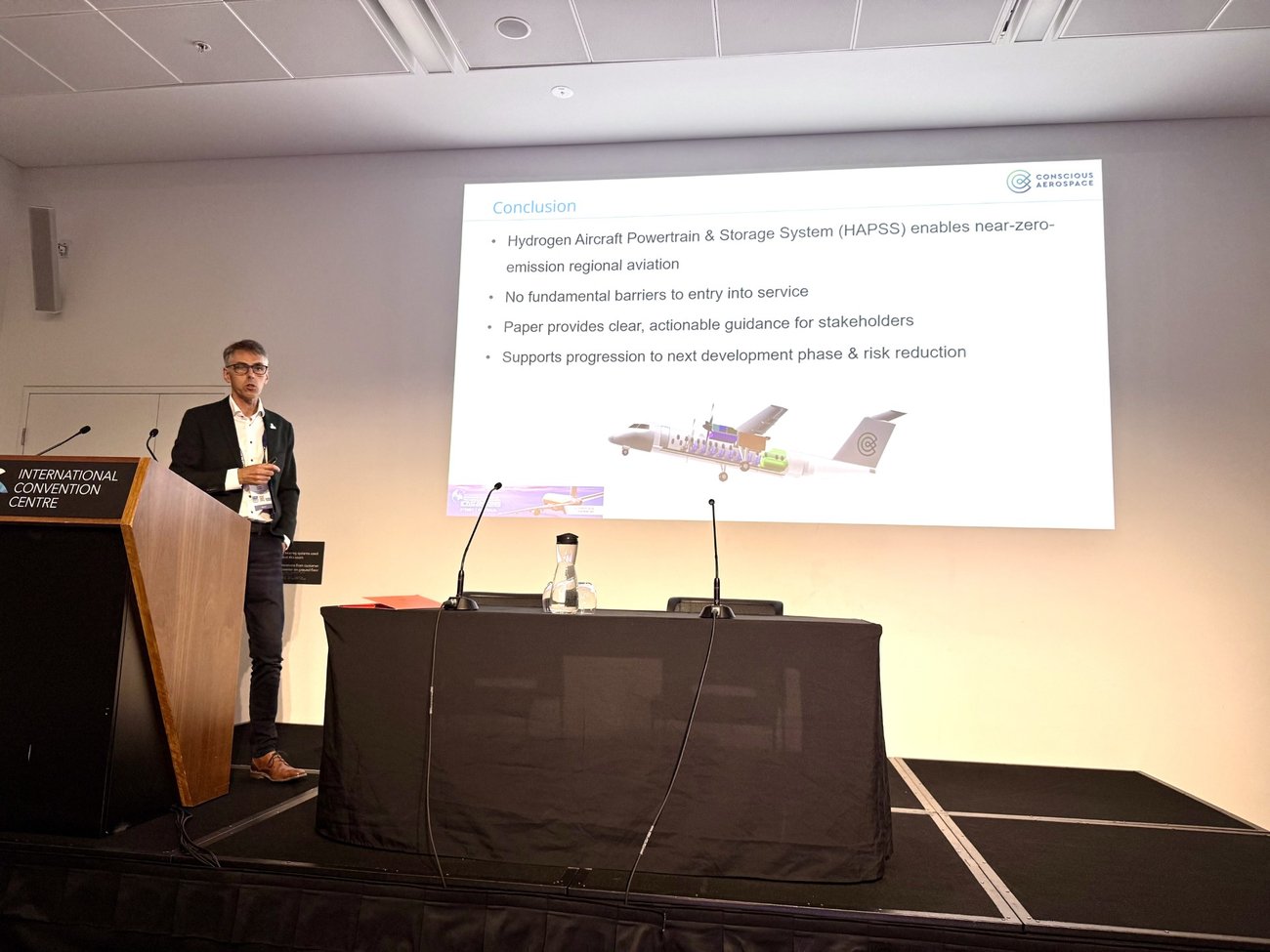
Bartjan Rietdijk from Conscious Aerospace and Ron van Manen from LiT attended the conference of the International Council of the Aeronautical Sciences (ICAS) 2026 to present their accepted papers. Following the acceptance of a first paper in 2024, this marks a second significant publication for HAPSS, focusing on the hydrogen-electric retrofit of the De Havilland Dash 8-300 aircraft by Conscious Aerospace. The paper was accepted for presentation at ICAS.
Ron van Manen presented his paper on how the Theory of Change (TOC) methodology can be used to assess the socio-economic value of a public-private innovation programme such as LiT.
ICAS is one of the largest and most influential gatherings in the field of aeronautical sciences, bringing together leading experts and innovators from around the world.
HAPSS Presentation
On 14 September 2026, Bartjan Rietdijk presented the paper “Concept of Operations for a Hydrogen-Electric Powered Modified Dash 8-300 Regional Aircraft: Performance, Operational, and Certification Impacts.” The study examines the implications of introducing a HAPSS-modified Dash 8-300 into the aviation system, addressing operational procedures, certification, airports, air traffic management, and training requirements.
The results demonstrate that a hydrogen-electric Dash 8-300 with a range of approximately 750 kilometres can operate within existing aviation infrastructure and air traffic systems, requiring only limited modifications to current processes and procedures. The most significant changes relate to ground operations, safety procedures, certification, and adapted training for ground personnel, pilots, and maintenance technicians.
The study concludes that HAPSS provides a credible and practical pathway towards near-zero-emission regional aviation. The associated technical, operational, and regulatory challenges are considered manageable, enabling development to progress to the next phase on the path towards commercial deployment in the 2030s.
The acceptance of this paper at ICAS once again highlights the innovative work being carried out within the HAPSS consortium and aligns closely with the mission of LiT.
LiT Presentation
At ICAS, Ron van Manen presented the paper “The Making of Luchtvaart in Transitie (LiT) and the Remaking of a Strong Globally Connected National Aeronautics Industry.” The publication describes how the Dutch aerospace industry has evolved since the end of Fokker into an internationally connected ecosystem and how LiT builds upon this foundation.
The paper demonstrates that the long-term value of public investment is not determined solely by initial market entry or market share, but also by the knowledge, skills, and research infrastructure that enable sustained innovation. The Theory of Change framework helps to capture this value, including competitiveness, CO₂ reduction, and strategic autonomy.
Other Contributions from the Dutch Ecosystem
It was encouraging to see broad representation from the Dutch aerospace ecosystem at the conference. Among others, NLR presented a paper on innovative load alleviation solutions, building on work that originated from one of LiT’s Supporting Research projects.
In addition, Andrew Murphy of Pratt & Whitney highlighted during a keynote address the intention to launch a research project on a cryogenic hydrogen fuel system through the European Technology and Innovation Center (ETIC) in Houten, in collaboration with Dutch partners and other stakeholders.
|
 |
|
|
|
Photo: Bartjan Rietdijk Presenting the HAPSS Paper at ICAS |
|
|
|
|
|
Project updates |
|
Flying Vision Accelerator brings diverse players together to take a next step to Accelerate Aviation's Transition
|
|
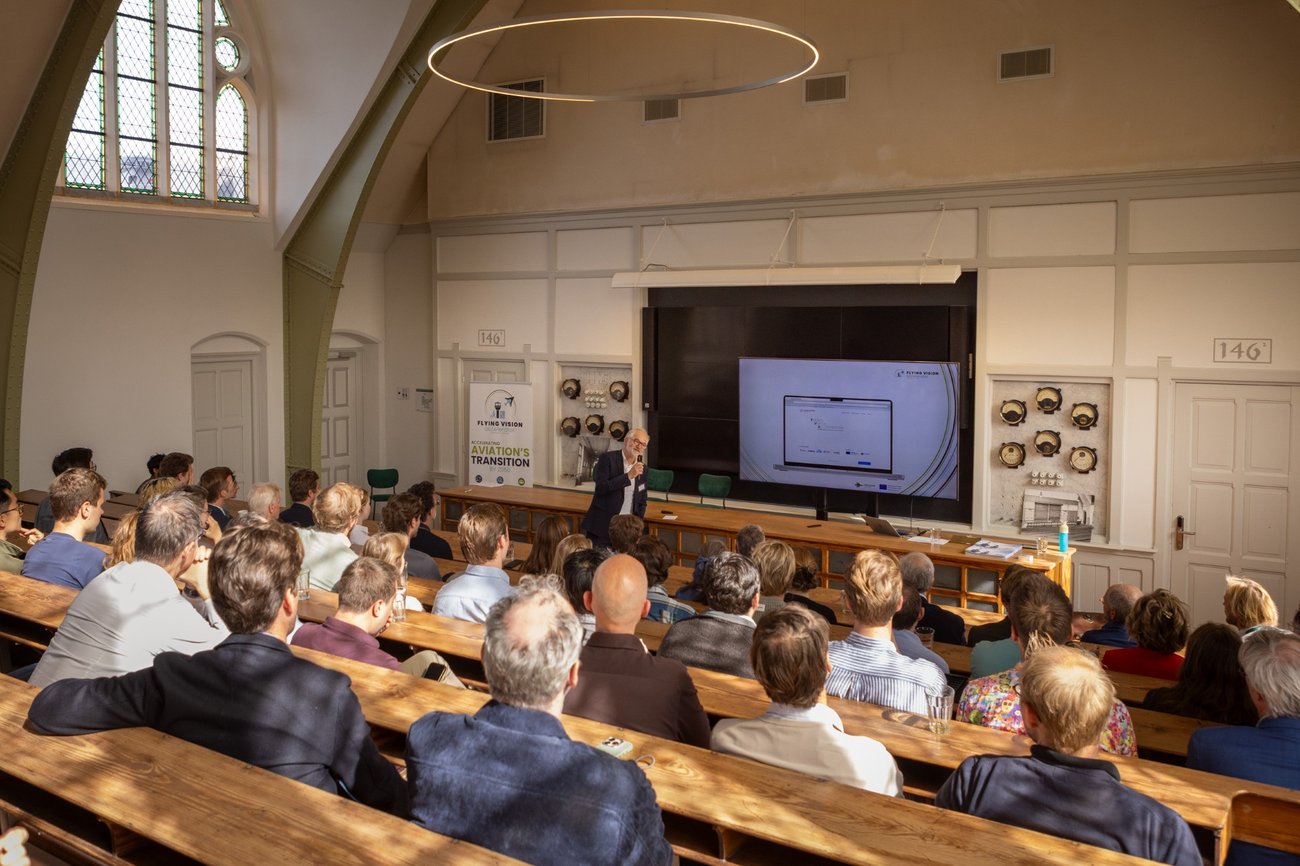
The latest Flying Vision Accelerator (FVA) think tank edition brought together researchers, policymakers, industry leaders, airport operators, environmental organizations and innovators to explore how aviation can accelerate its transition towards the sector's lower-carbon emissions goals.
The discussions came just days after the Netherlands Environmental Assessment Agency (PBL) concluded that the Netherlands is not on track to meet its climate ambitions, warning of a growing gap between long-term goals and current policy measures. The findings reinforced a central theme we heard throughout the event, that achieving transformative change requires stronger collaboration across sectors and disciplines.
After the plenary talks by Chris van Dijk from Royal Schiphol Group, Bert van Mourik from Natuur & Milieu and Karel Bockstael from Call Aviation to Action, the interactive breakouts on topics such as future aircraft concepts, alternative energy carriers and travel behaviour in 2050 led participants beyond individual technologies to explore the broader system changes required to accelerate decarbonisation in aviation. A recurring insight was that technical innovation alone will not deliver the transition. Progress depends equally on coordinated investments, infrastructure development, different ways of thinking about travel, public acceptance and new forms of cooperation.
The speakers representing airports, industry initiatives and environmental organisations challenged participants to look beyond their own perspectives. While viewpoints differed, the discussions were rich in content and revealed a surprising degree of common ground, as long-term progress is accelerated when stakeholders work together on shared outcomes rather than isolated solutions.
This is precisely what makes the Flying Vision Accelerator unique. Rather than promoting a single technology or pathway, FVA creates a platform where science, industry, government and civil society jointly build an evidence-based roadmap for the future of flight, and guide users in navigating it. In a period where Dutch climate ambitions risk outpacing implementation and growth out-accelerates measures, initiatives such as FVA demonstrate how collective action can bridge the gap between ambition and execution and leave space for shared exploration.
As work continues towards the next roadmap update at the end of 2026 we need to continue to align diverse actors around a common vision for change, next to all technological breakthroughs.
Thank you to our team members and consortium partners in organizing another great event!
|
 |
|
Photo: Victor Rijkaart presents at the FVA Think Tank |
|
|
|
|
|
Events |
|
That's one small step for man, one giant leap for hydrogen aviation
Marlies represented LiT at the launch of the Hydra-2
|
|
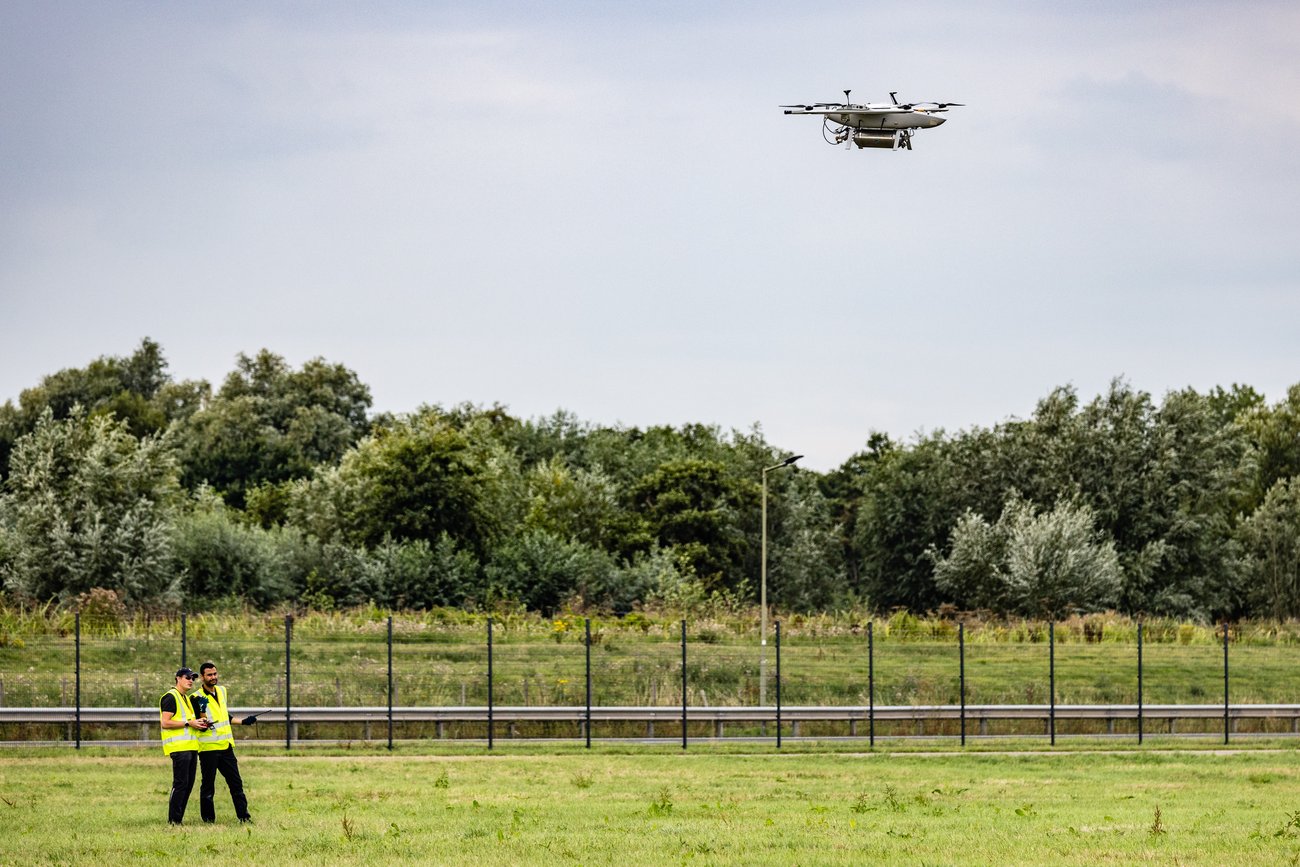
On Wednesday, August 26, a major milestone was achieved: after years of preparation, a drone powered by liquid hydrogen took off from an operational airport for the very first time. Small news? Quite the opposite.
The flight took place as part of the TULIPS project, and on behalf of LiT, I had the opportunity to witness the event at Rotterdam The Hague Airport. For me, it was particularly special because nearly six years ago, while working at NLR, my collegues and I were involved in the creation of the original project proposal. From NLR to Rotterdam The Hague Airport, and now, in my role at LiT, I was finally able to see the project take flight.
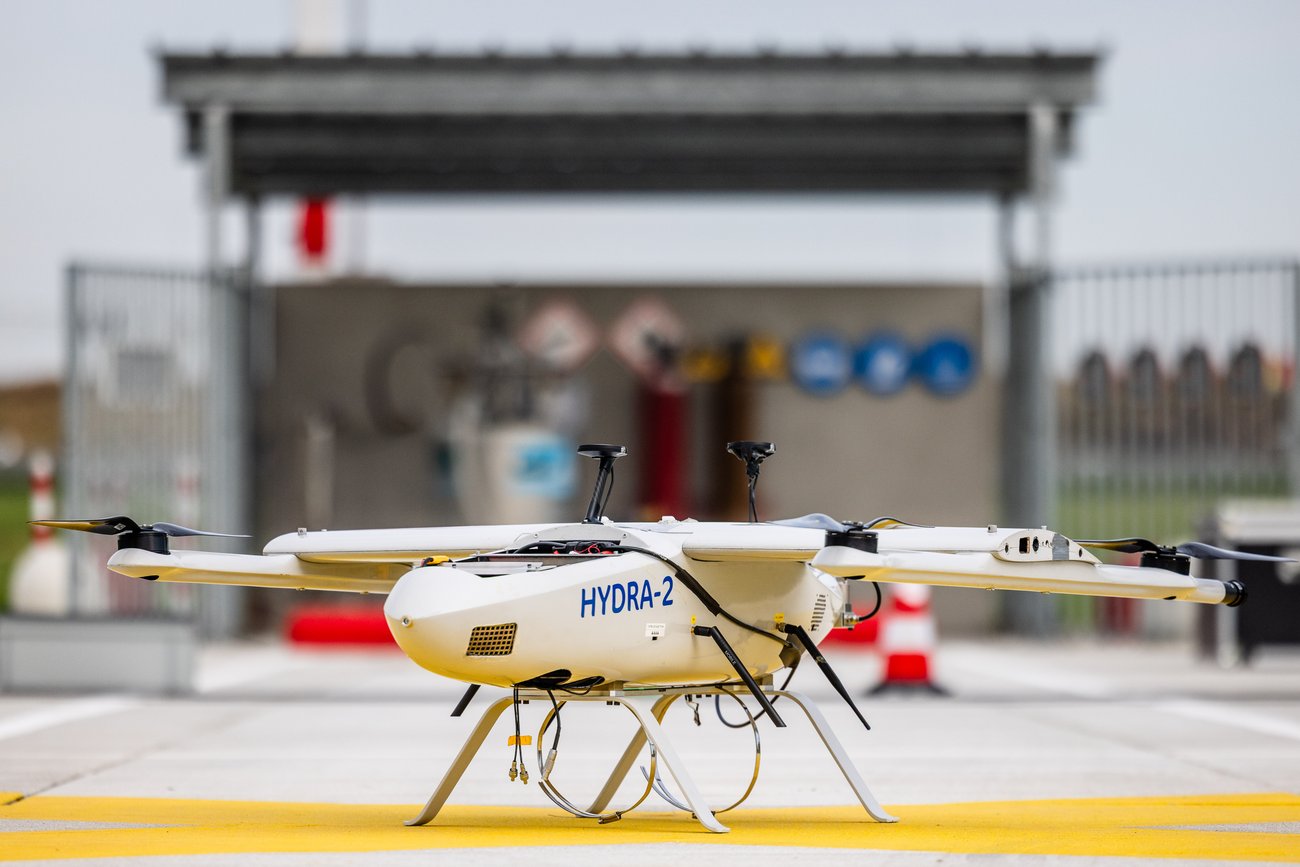
After a warm welcome, we headed airside, where we followed the preparations over a fresh cup of coffee. NLR's Hydra-2 drone had already been fuelled the day before using the airport's liquid hydrogen storage facility, with the liquid hydrogen supplied by Air Products. This storage facility was also realised as part of the TULIPS project.
Then came the most exciting moment: receiving clearance from Air Traffic Control to take off. With several Transavia aircraft still arriving and the available time window rapidly closing, it remained uncertain until the very last moment. But the drone successfully lifted off, completed its flight, and landed safely.
What makes this achievement so remarkable is that it represents not only a technological breakthrough, but also a major operational step forward. Never before had a hydrogen-powered drone operated airside alongside commercial aircraft. A tremendous amount of work preceded this flight, and the knowledge gained will now benefit the entire aviation ecosystem.
A huge round of applause to everyone who contributed to this achievement. After lunch, the programme continued with a series of inspiring presentations from across the hydrogen aviation ecosystem.
This was a landmark day for hydrogen in aviation and one that the Netherlands can be truly proud of. |
| Read the update |
|
|
|
|
|
Photo: Hydra-2 Takes Flight at Rotterdam The Hague Airport |
|
|
Photo: The Hydra-2 drone is shown in front of the liquid hydrogen storage facility. |
|
|
|
|
|
Partner in de Spotlight: KVE Composites |
|
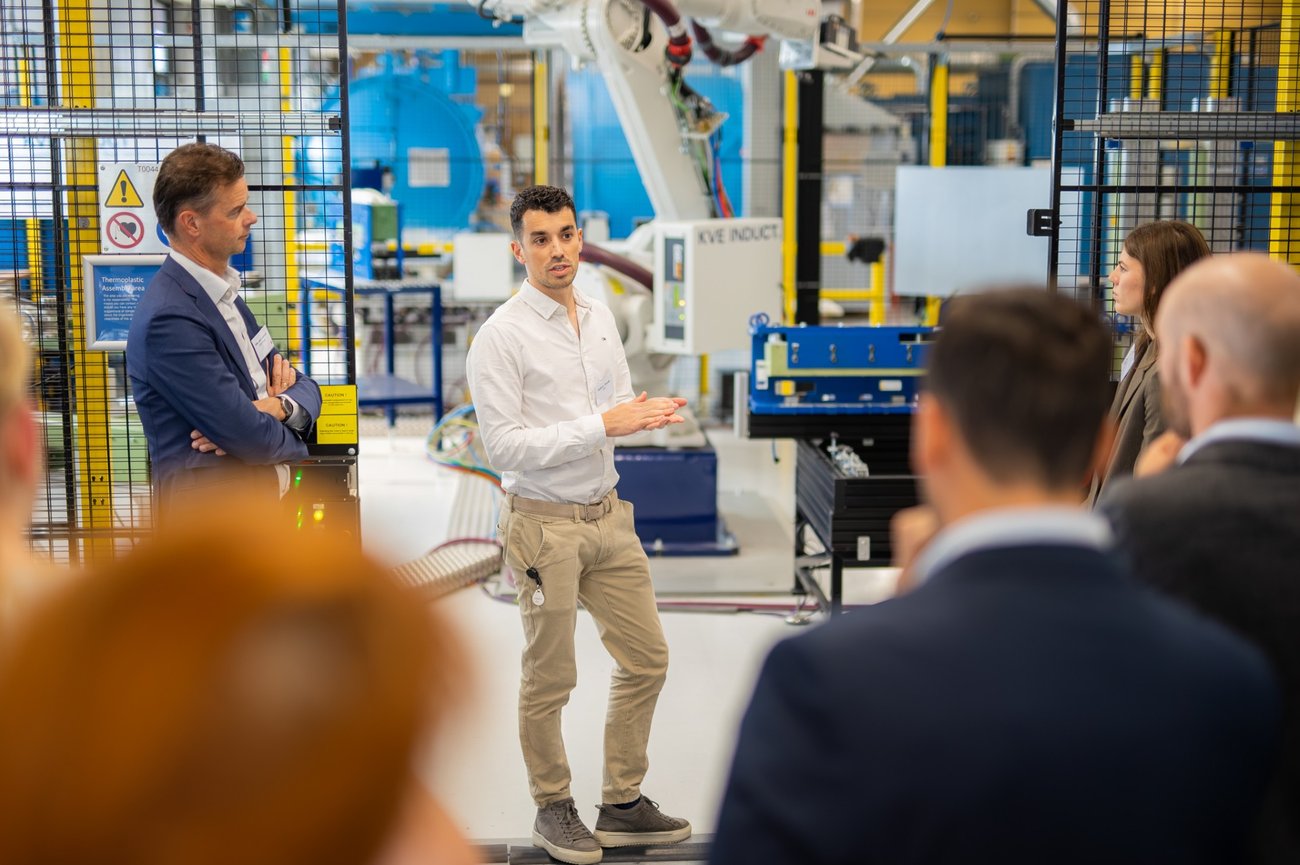
Founded in 1996, KVE specializes in the design, manufacturing and repair of high value-added composite structures. The company primarily serves the defense and aerospace sectors, which account for approximately 80% and 20% of its business – respectively. Its products are used in radar systems, communications equipment, drones, aircraft wings and next-generation rotor blades.
Innovation in composites
Originally established as an engineering company, KVE has progressively developed its own industrial capabilities and has become one of Europe's pioneers in induction welding for thermoplastic composites. This patented technology enables structures to be assembled without rivets or adhesives while reducing weight, costs and production lead times.
Accelerated growth since joining Daher
Daher's acquisition of KVE in 2019 marked a pivotal step in the company's development. Since 2020, KVE's revenue has quadrupled and its workforce has tripled. This growth has been supported by strong market demand as well as Daher's industrial expertise, certification capabilities, investment capacity, business development support and access to major aerospace and defense players. In addition, KVE's EN9100 certification enables the company to meet the stringent quality and industrial performance requirements of these sectors.
KVE in LiT
KVE’s innovative induction welding process is identified as a key enabling technology to produce thermoplastic aerostructures at high rate. With support of the LiT STC project, KVE is able to further mature the process for application in the next generation of aircraft.
30 years of KVE
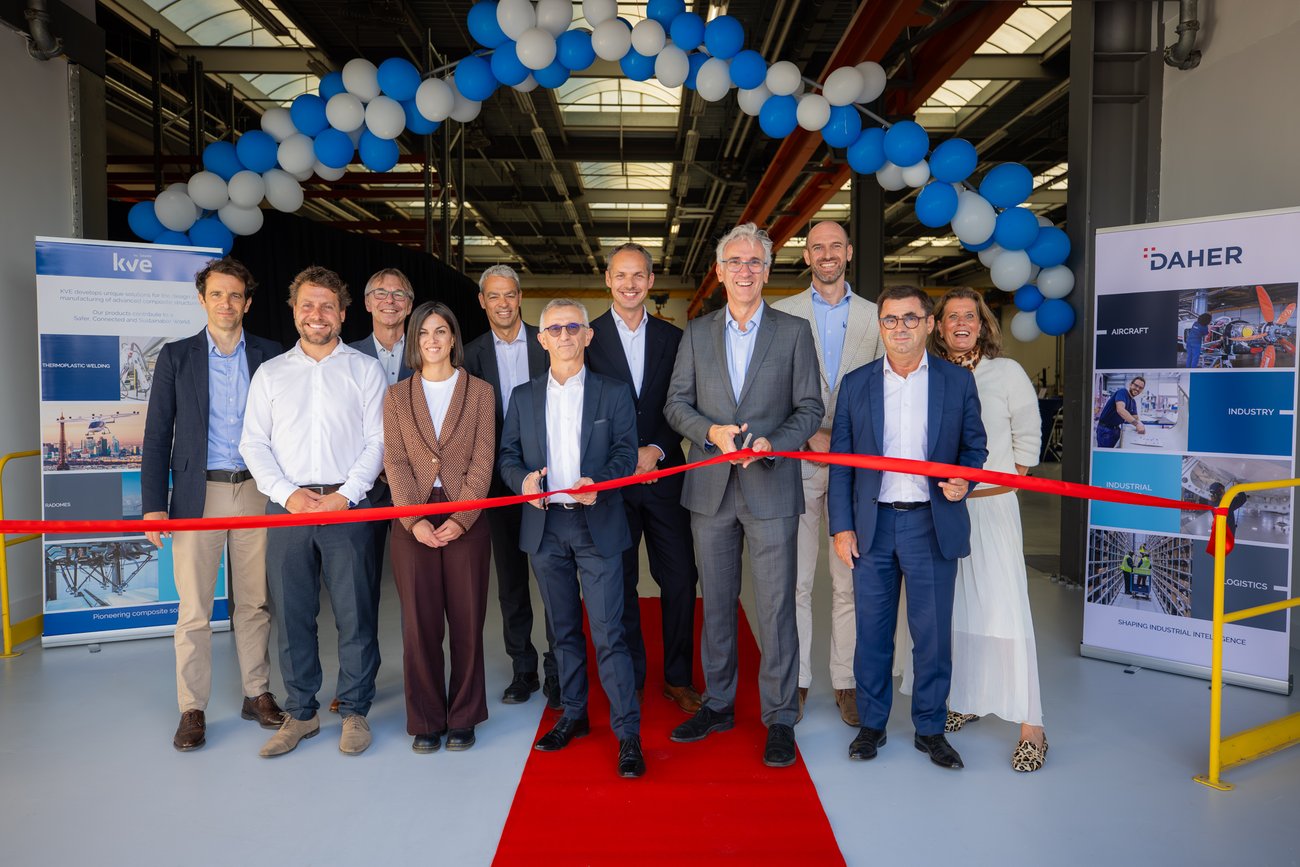
On the 10th of September 2026, KVE celebrated its 30th anniversary.
"KVE's 30th anniversary is an important milestone, but above all, it marks the beginning of a new chapter,” said Pierre Rouch, Managing Director of KVE. “Since joining Daher, we have significantly accelerated our development. By combining our expertise in advanced composites with the Daher Group's industrial capabilities, aerospace experience and international presence, we have created an environment that fosters innovation and growth. New investments will enable us to sustainably support the ramp-up of our customers' aerospace and defense programs."
2050
With the expected growth, our company will play a more dominant role in supporting both the aerospace and defence sector.
KVE’s radomes are used in radar systems to protect our allies. Our one-shot RTM rotor blade technology offers a unique solution for the rapid expanding drone market. Finally, we expect to see implementation of our welding technology in the next generation of aircraft, meeting both sustainability and production rate demands.
We will continue to contribute to a safer and more sustainable world. |
|
|
|
|
|
Photo: 30 year anniversary KVE Composites |
|
|
Photo: The opening of the new facility |
|
|
|
|
|
23 September 2026
24 September 2026
1 October 2026
8 October 2026
18 October 2026
29 October 2026
2 - 4 November 2026
5 - 6 November 2026
17 - 18 November 2026
30 Nov - 1 Dec 2026 |
|
|
|
|
|
|
Want to know more about LiT? |
|
|
|
|
|
|