|
|
|
|
|
In this edition of the newsletter, we look back, among other things, on the ILA aerospace trade fair and exhibition in Berlin. We also welcome a new colleague, discuss the Flying Vision Accelerator Roadmap launch, the LiT Community Event, and several ongoing projects. Finally, in this edition, we put partner AE-Group in the spotlight: a company focused on advanced electromagnetic propulsion systems that contribute to zero-emission regional and urban aviation.
|
|
|
|
|
*For the best reading experience, we recommend downloading the photos. You can also mark this email address as “safe” to always open the newsletter with images and therefore enjoy the best reading experience.
|
|
|
|
|
|
|
Updates |
|
ILA Aerospace Trade Fair and Exhibition in Berlin
|
|
Aviation in Transition was well represented at ILA Berlin – with partners, ministries, the board and the programme office all in attendance. And of course, NAG was there as well. The trade fair as a whole was also busy this year and, as expected, featured a strong focus on defence.
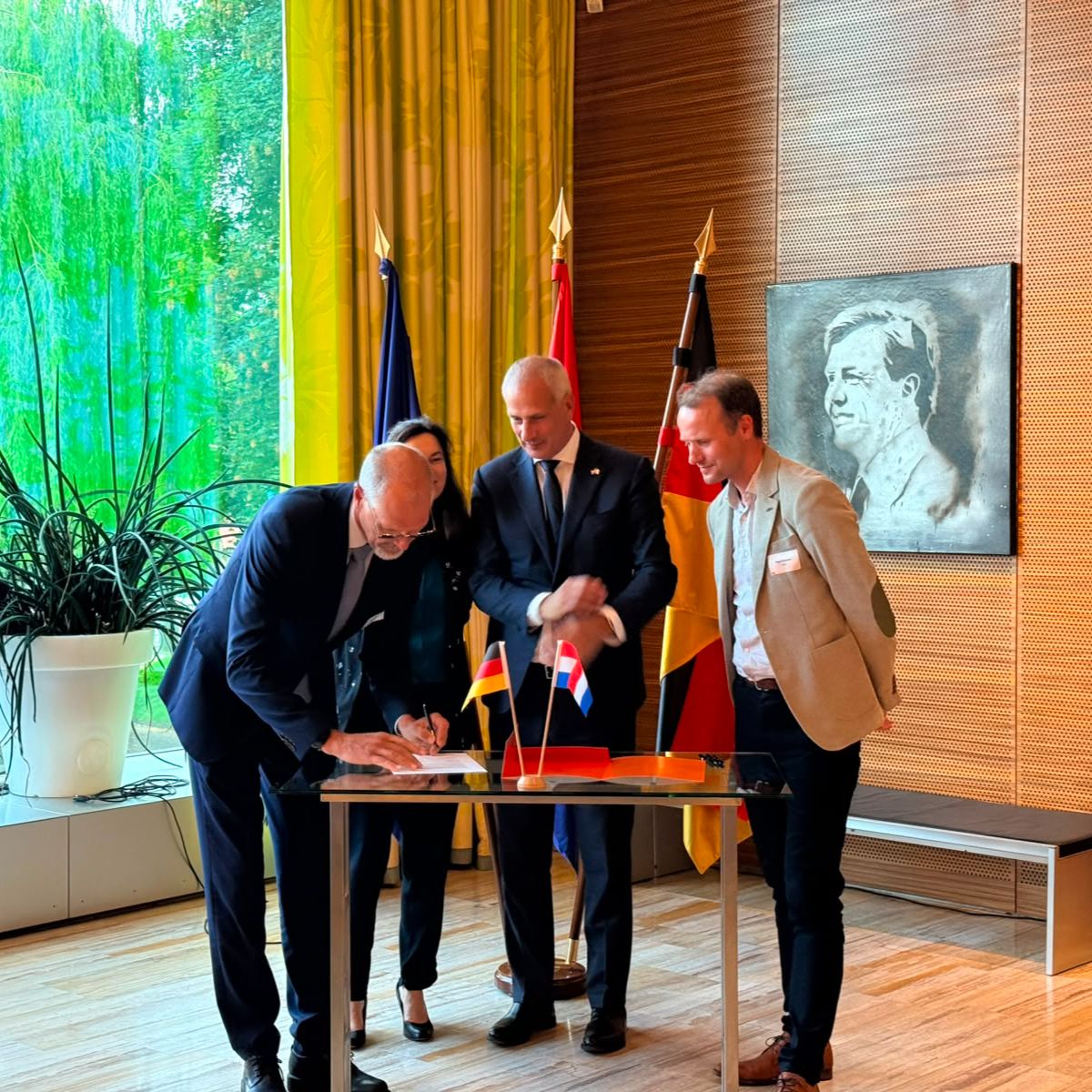
For LiT, the trade fair is highly relevant considering German programmes such as LuFo and the German business community. An additional visible moment was a German-Dutch reception at the Dutch Embassy. During the reception, a Letter of Endorsement was immediately signed by NAG, LiT and Airbus, focusing on collaboration in the field of composites. |
 |
|
|
|
Launch of the Flying Vision Accelerator Roadmap
|
|
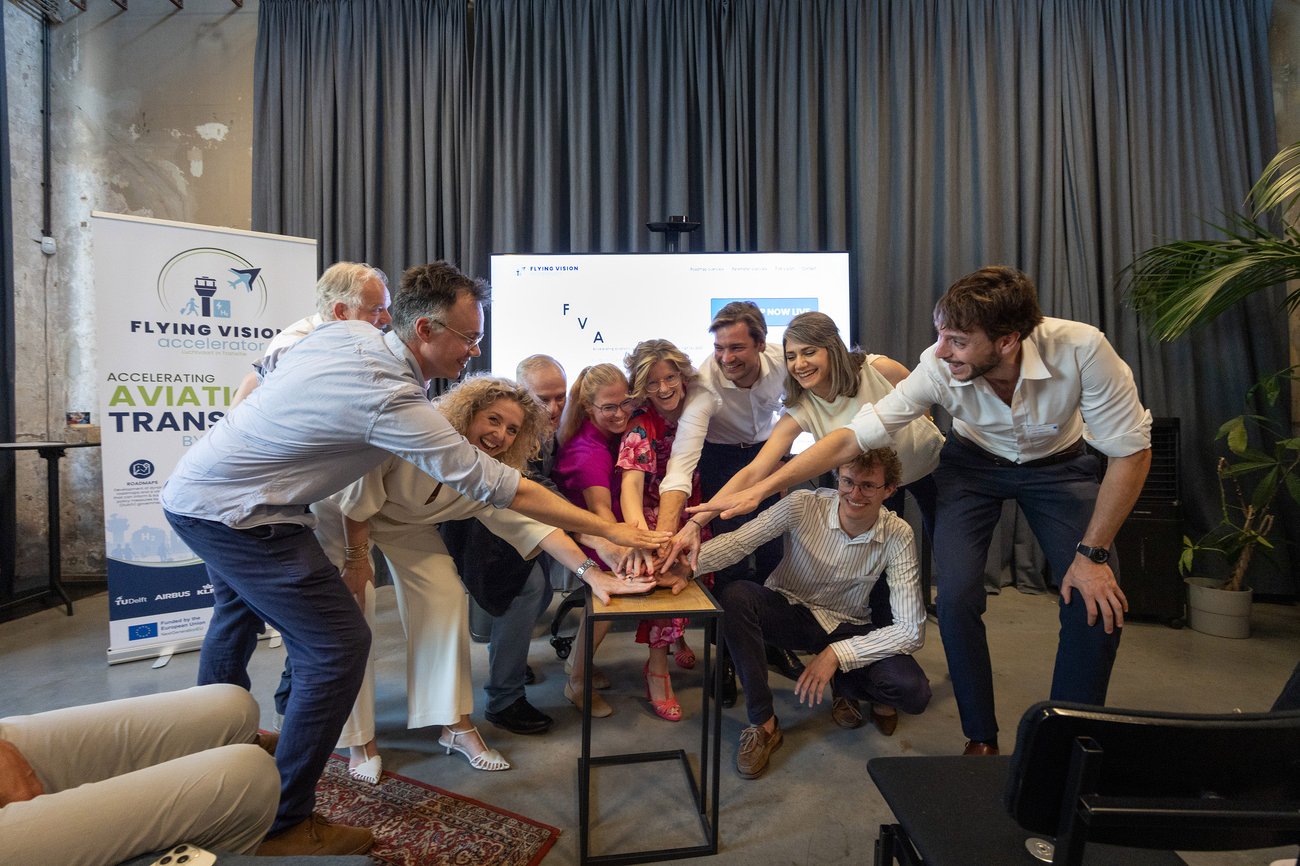
The Flying Vision Accelerator project reached an important milestone with the official launch of the first Roadmap on June 22nd .
The event brought together a diverse group of researchers, engineers, policymakers, innovators, and industry experts as well as consortium partners TU Delft, Royal NLR, Airbus, KLM Royal Dutch Airlines and Royal Schiphol Group for an afternoon dedicated to collaboration, knowledge exchange, and co‑creation.
The program featured keynote contributions from leading voices in our community.
- Tjaard Sijpkes (TU Delft) explored the theme “Thinking Beyond the Horizon … and what limits us to see it?”
- Colette Forma (KLM) presented KLM’s strategic perspective on the pathway to 2050.
Consortium partners NLR, Airbus and Royal Schiphol Group provided short pitches highlighting ongoing research and innovation efforts.
Participants were part of the festive reveal of the newly released first iteration of the FVA roadmap and shared ideas for next roadmap iterations.
A central part of the event consisted of three thematic Think Tanks, each examining a core theme of the FVA project:
- Reducing energy demand of the aircraft & flight, where experts prioritised 40 novel technologies based on estimated emissions impact, technological readiness, and cost
- Implementing novel energy carriers, where experts mapped the first research directions for treating aviation as part of a wider mobility system, weighing technological combinations, system integration and demand management against feasibility, ownership, and the standards needed to connect separate systems.
- The future traveller in 2050, where experts assessed various travel persona’s, such as the ‘high-income, leisure’, ‘young aspirational, leisure’, and ‘business’ persona, as well as opportunities, blockers and enablers.
With over 70 participants, the successful event underscored the importance of shared knowledge, coordinated action, and a strong innovation ecosystem in advancing the transition of aviation. The engagement and expertise of the community continue to drive the Flying Vision Accelerator project forward.
The FVA consortium will host additional Think Tanks throughout 2026. Stakeholders interested in contributing to next roadmap iterations, that have ideas about specific fields of interest are cordially invited to reach out to the FVA team.
Click here to view the roadmap.
|
 |
|
Official launch of the Roadmap. Photo: Studio Oostrum. |
|
|
|
|
|
New colleague in the programme office
|
|
Since June 15th, Sibren van Hoeven has been working for the programme office of LiT as a communications officer. In this role, he will primarily focus on developing the communications strategy for the coming period on a part-time basis.
As a finishing master’s student in political science and an experienced communications professional, Sibren combines insight into public and political relations with skills in communications strategy. He has gained communications experience at the Dutch National Student Union (LSVb), the Dutch Labour Party (PvdA), and as an independent professional for various civil society organisations. Outside of work, Sibren really enjoys reading, going to the gym, playing guitar, cooking, and is a big football fan.
Sibren:
“I am really looking forward to strengthening LiT in its mission to make aviation more sustainable. As a young, values-driven professional who enjoys turning ideals into results, I quickly felt a connection with the programme office. Although sustainability and the aviation sector are new worlds for me, I am very eager to learn and excited to apply my experience in communications and policy at LiT!” |
|
|
|
|
|
Future Aviation Challenge by Human Capital Agenda
|
|
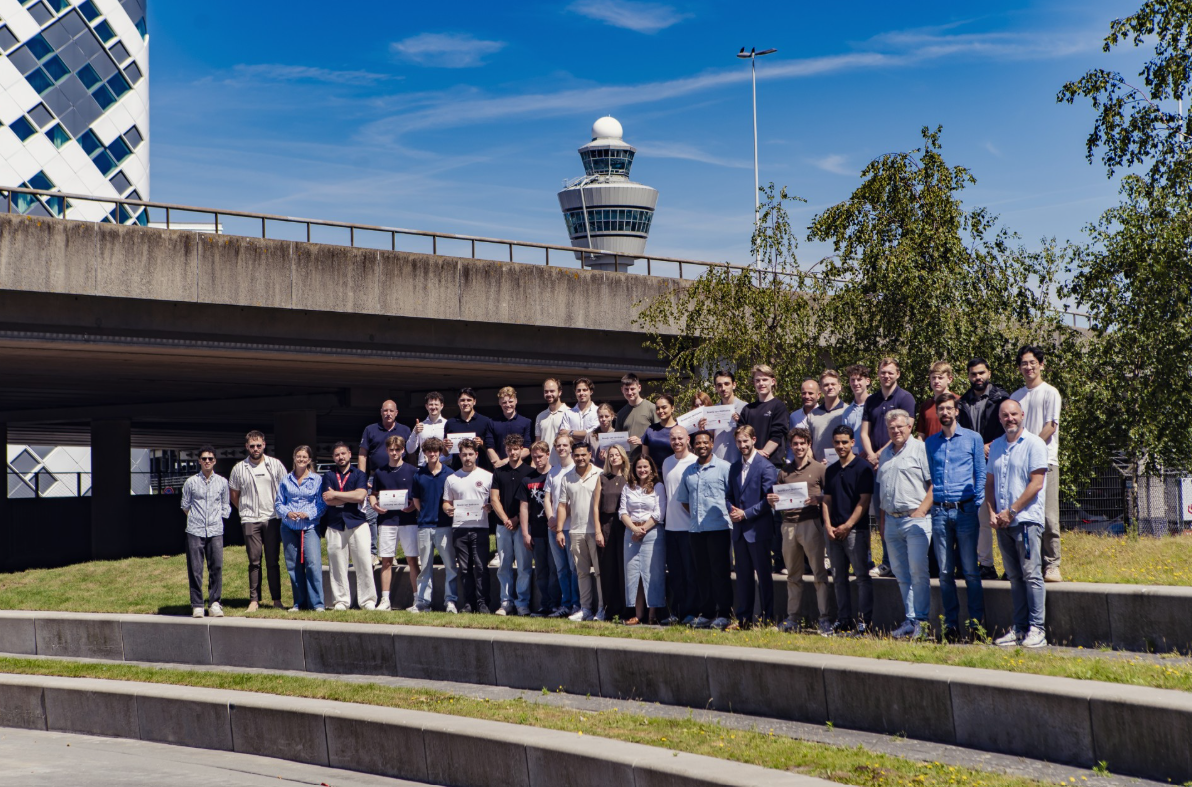
On 18 June, student teams presented their innovative prototypes during the final of the Future Aviation Challenge, part of the Human Capital Agenda of Aviation in Transition.
For ten weeks, vocational, university of applied sciences and research university students worked intensively together on current sustainability challenges in the aviation sector. From electric flying and smart waste separation using sensors and automation to an innovative 3D-printed solution for a KLM packaging challenge: the results were impressive.
In addition to developing prototypes, the students were given a unique insight into professional practice. They visited companies, became acquainted with different educational environments and presented their ideas to an expert jury. The clients, KLM Engineering & Maintenance and CHILL, were impressed by the creativity, quality and innovative capacity of the teams.
The winners were offered a flight by MBO College Airport in the world’s first certified electric aircraft: the Pipistrel Velis Electro. They will also have the opportunity to present their prototype at the LiT Aero Conference ’26.
The sector is facing a shortage of aircraft technicians, engineers and researchers, and with the introduction of new aircraft and technologies, this challenge will only grow. That is why it is crucial to attract new talent and upskill current staff in order to accelerate the aviation transition. Despite a clear shared passion and interest, it is not always self-evident that aircraft technicians, engineers and researchers find, understand and value one another. By 2050, aviation must be climate-neutral, and this requires momentum. By working together on concrete challenges, students and professionals from different disciplines get to know each other better and jointly strengthen the aviation transition. In this way, an initiative such as the Future Aviation Challenge contributes to ensuring a sufficient and well-trained workforce with knowledge of technology, sustainability and innovation.
Want to take part too?
The Future Aviation Challenge shows how much creativity and talent is available across vocational education, universities of applied sciences and research universities. For organisations, participation offers a unique opportunity to gain new insights, meet young talent and contribute to the aviation of the future. Does your organisation have a challenging issue? We would be happy to discuss participation in a future edition.
Read more about the Human Capital Agenda project and the contact details of the project leader here. |
 |
|
|
|
|
|
External Review of the Advanced Electrical Wiring Project
|
|
On 27 and 28 May, we welcomed external reviewers Simon Weeks and Pat Wheeler for a thorough evaluation of the Wiring project. The review took place at two locations: GKN-Fokker in Papendrecht and ADSE in Hoofddorp.
The first day focused on an in-depth technical review of the current phase of the project, which will run until the end of 2026. Topics such as high-power wiring, partial discharge, wireless communication, integrated electrical wiring and the automation of engineering & production were discussed in detail. The work package leaders presented their findings, while the consortium of 12 partners listened in via Teams.
The second day was dedicated to the plans for phase 2, which will start in early 2027, with special attention to earning capacity. Although the plan for phase 2 is still under development, the reviewers provided valuable suggestions to help determine the direction.
We are proud to report that the reviewers were very impressed. Their initial feedback was: “Well run, well managed, excellent project delivery – excellent review.” They also praised the project’s clear and realistic market strategy.
With this positive evaluation, we look forward to the future of the project and the start of phase 2 with confidence. |
|
|
|
ASMG Meeting at the Dutch Embassy in Berlin
|
|
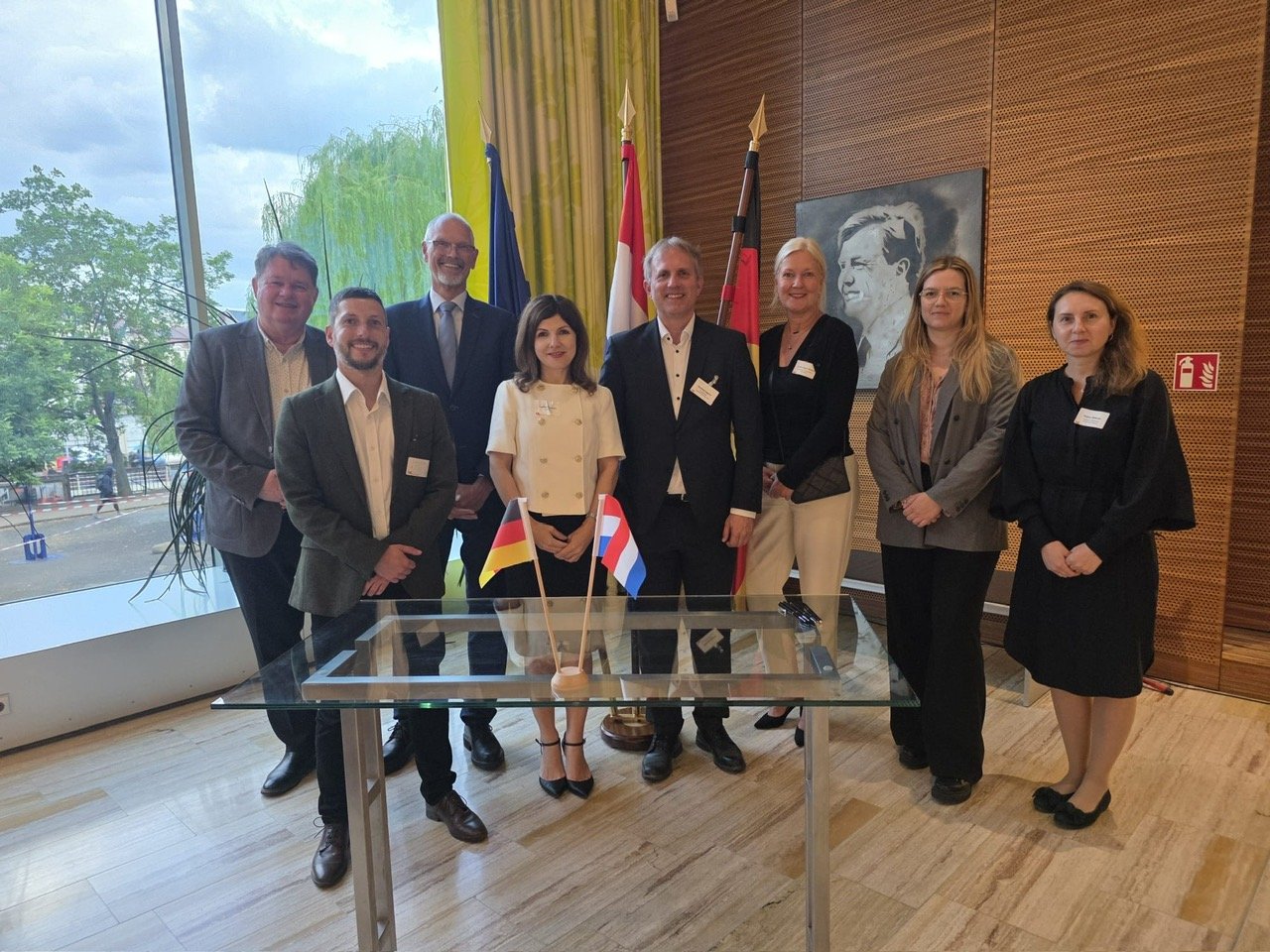
On Wednesday 10 June, during the ILA Berlin aviation trade fair, the third general assembly took place of the partnership between national governments and aviation innovation programmes from Germany, the Netherlands, Austria, Romania and the United Kingdom.
This partnership was established following a project carried out with support from the European Union under Horizon Europe (AREANA), in which the Netherlands was represented by Royal NLR. Aviation in Transition had not yet been formally established at the time the proposal was submitted to the European Commission. LiT and NLR worked closely together during the implementation of the project, coordinating closely with the Ministries of Infrastructure and Water Management and of Economic Affairs and Climate Policy.
The AREANA project resulted in a Memorandum of Cooperation between the aforementioned countries and innovation programmes (and implementing organisations), in which they agreed to actively connect bilateral and/or multilateral cooperation between innovation projects in the national ecosystems and to create synergies. The first successful collaborative projects were already established during 2025, including between the Netherlands and Germany.
At this general assembly, in addition to reviewing the past year and the upcoming “calls” in the national programmes, the composition of the partnership’s board was also reconfirmed. Ron van Manen (LiT Programme Director) stepped down as planned and is succeeded by Vera Eichberger of Austria’s FFG. Chris Low of the UK’s ATI takes over the role of vice-chair from Vera following her appointment as the new chair. |
 |
|
|
|
LiT Community Event at Aeronamic
|
|
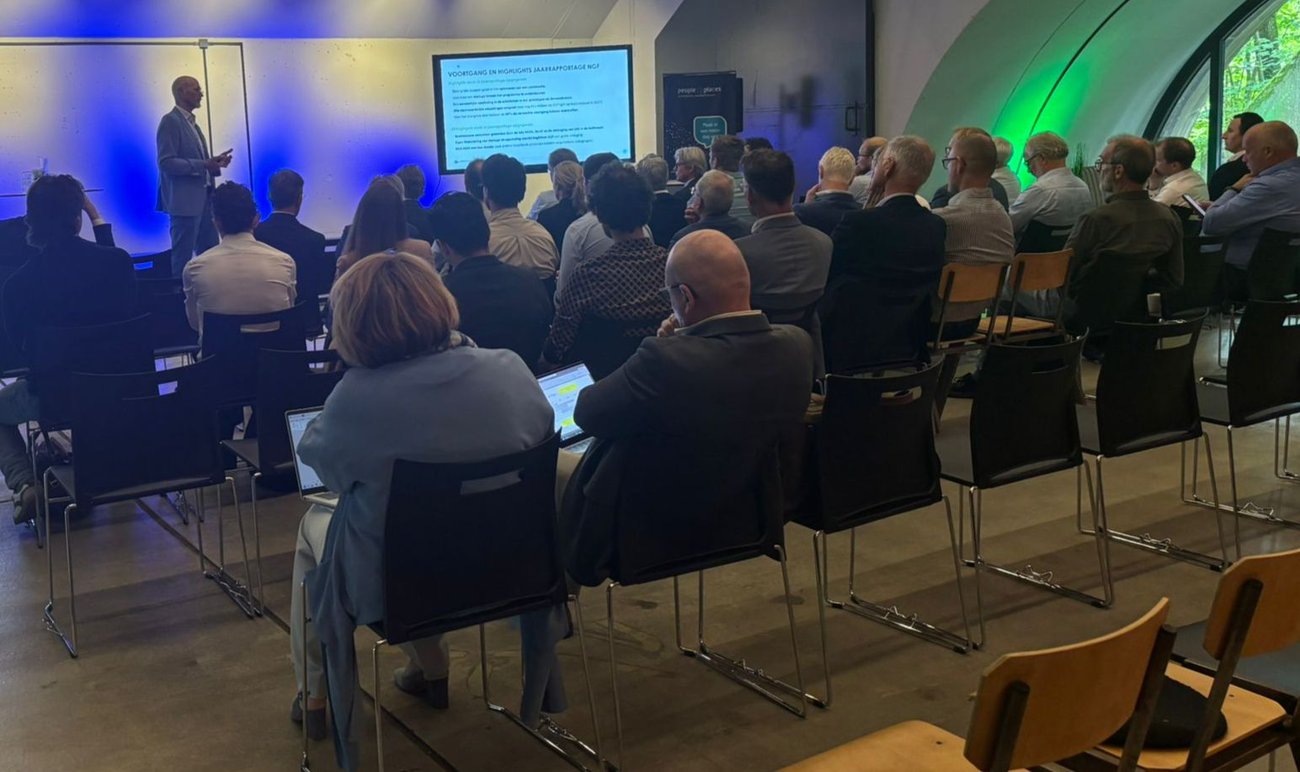
Last week, the LiT community gathered at partner Aeronamic on the Technology Base in Enschede for the biannual Community Event. Set in a unique former F-16 hangar, the day focused on knowledge sharing, collaboration and strengthening connections across the LiT ecosystem.
The day started with the General Assembly, attended by representatives of the participating organisations. During this session, the Programme Director and Chair of the Board provided an update on the programme's progress, both in terms of content and finances. There was also ample opportunity for questions, reflections and constructive discussion about the future of LiT. Following the General Assembly, the rest of the community gradually arrived and the Community Event officially began.
During the plenary programme, participants were updated on developments across the LiT programme and several ongoing projects. In addition, Roalt Aalmoes, project leader of DASAL, provided insights into the results and lessons learned over the past years. His presentation offered a valuable look into the complex challenges and processes addressed within the project.
The group was then divided into two smaller groups, with all participants attending both sessions during the afternoon. In the first session, the Human Capital Agenda shared its progress and plans for the next phase of the project while gathering valuable input from industry and knowledge partners. The session served as an effective mechanism to further align project activities with the needs and expectations of the broader ecosystem.
The second session took participants on a short walk across Twente Airport to Aeronamic's hangar, where they were introduced to the advanced compressor technologies being developed within the TePS project. During a guided tour along four demonstration stations, participants gained insight into the various components, applications and technical challenges involved. It provided an impressive behind-the-scenes look and a valuable opportunity for the wider LiT community to experience the innovation taking place within the programme firsthand.
As always, the afternoon concluded with networking drinks and a buffet. These informal moments continue to play an important role in strengthening existing relationships and creating new connections across the LiT community.
We would like to thank Aeronamic for hosting and co-organising the event, and all participants for their active contributions to another successful and valuable Community Event. |
 |
|
|
|
|
|
Sustainable Aviation Roundtable (DLT) Meeting with Minister Karremans
|
|
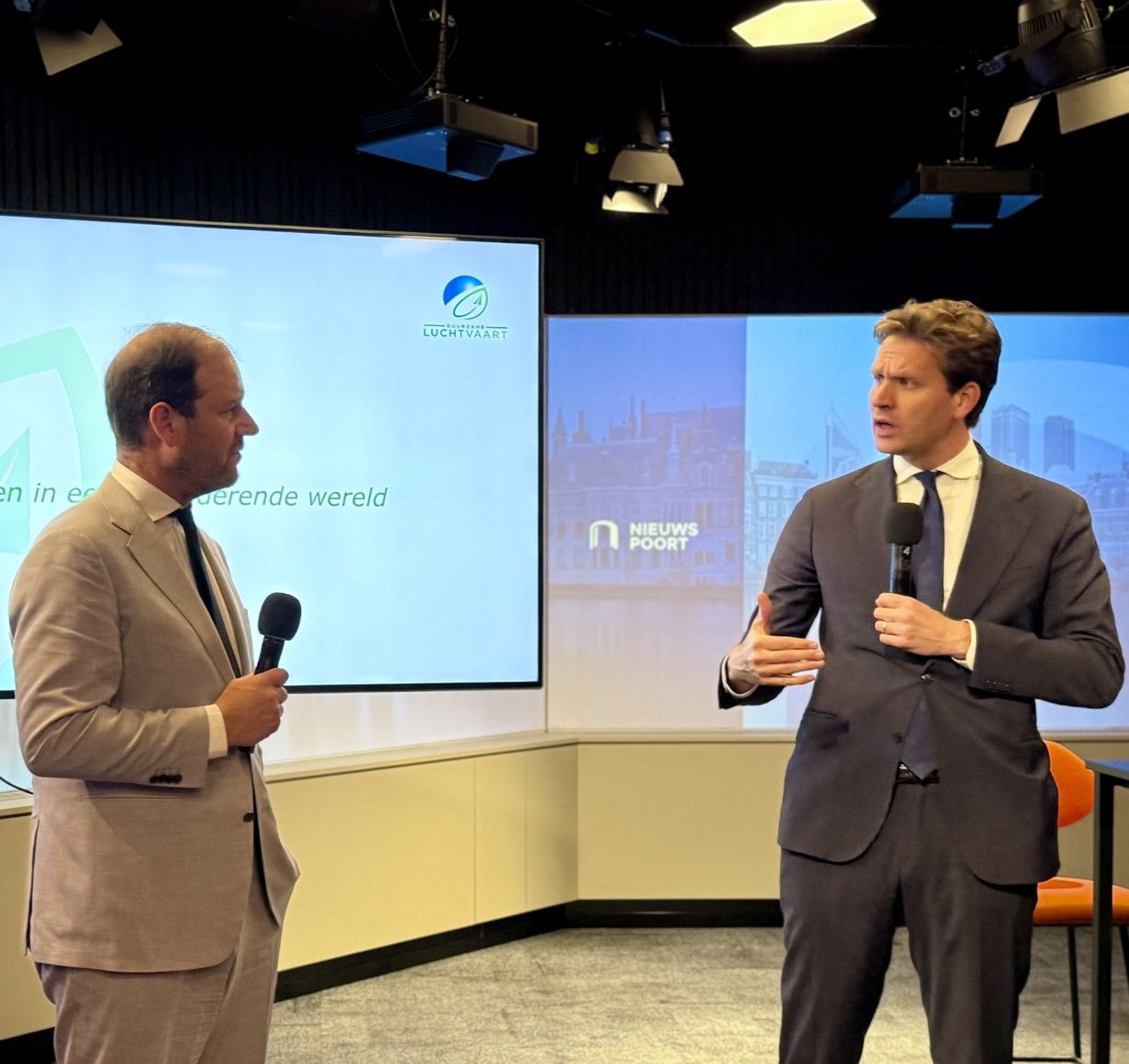
On Tuesday 18 June, Minister of Infrastructure and Water Management Karremans attended a meeting of the Sustainable Aviation Roundtable (Duurzame Luchtvaarttafel, DLT). There, he spoke enthusiastically about the need for “aviation without fossil fuels”. Several LiT board members were present, with Henri Werij contributing to the panel discussion. We thank the Minister for attending and DLT for organising this event. |
|
|
|
|
|
Technical Demonstration DASAL
|
|
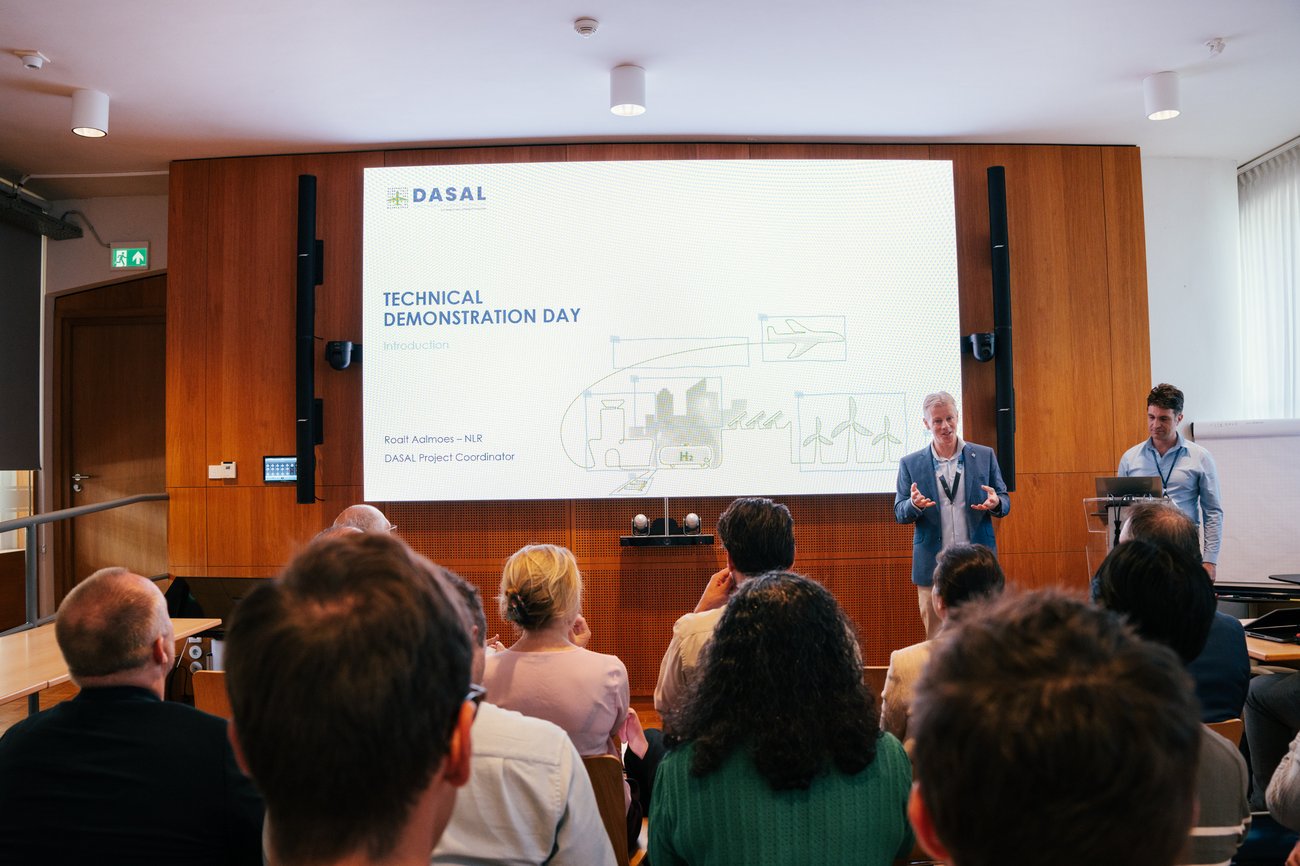
Dutch Aviation Systems Analysis Lab, abbreviated as DASAL, took an important step on 28 May. NLR and TU Delft demonstrated the project’s initial research infrastructure, in which both organisations linked their simulation models for the first time. The demonstration was aimed at showing a proof of concept. “At this stage, we are not yet primarily concerned with the precise outcomes of our calculations; instead, the focus is on the collaboration between models and researchers.
The linking of a total of ten simulation models from NLR and TU Delft, intended to map the differences between current aircraft and future hydrogen-powered aircraft, worked exactly as intended during the demonstration,” said Roalt Aalmoes, coordinator of the project.
DASAL aims to further develop and connect various simulation models related to future, more sustainable aviation. “How we fly, how we carry out maintenance and which policies can best support this are also important. Researchers have long been calculating all these separate elements; in our project, the goal is precisely to connect them in order to obtain a clearer overall picture.”
Because of the ambition to develop as complete a picture as possible of future aviation, NLR and TU Delft are working closely together in DASAL. “We already collaborate extensively in many specific areas. What is new is that within DASAL we are combining our strengths much more broadly, across the entire theme of climate-neutral aviation,” adds Gianfranco La Rocca, DASAL project leader from TU Delft.
Around 85 researchers are involved in the project. In addition to further developing the research infrastructure, they are working on various models, ranging from aircraft design to climate impact and from ATM to noise impact. This model development is guided by so-called use cases, which can be used to stimulate and analyse both policy and technical innovations, for example to identify bottlenecks or opportunities at an early stage. |
 |
|
|
|
|
|
Partner in the Spotlights: AE-Group |
|
The AE-Group (Advanced Electromagnetics Group, www.ae-grp.nl) is an industrial partner in the Dutch Luchtvaart in Transitie (LiT) (Aviation in Transition) innovation program through TSR-LiT. Our role focuses on researching, designing, and testing advanced electromagnetic drivetrains to help enable emission-free regional and urban aviation.
Within the IOHEVA project (stands for Hybrid-Electric Aircraft Modeling an aeronautics research initiative that focuses on accelerating the development of hybrid and electric aircraft propulsion systems), the AE-Group spearheads the optimization of electrical powertrains, designing ultra-lightweight, high-torque electric motors, gearbox and power electronics essential for (hybrid-)electric aircraft. The AE-Group bridges the gap between electromagnetic design, scaling, series production and testing of electric drives. As a specialized technology center with it headquarter based in Waalwijk, AE-Group is taking on the challenge of developing extreme power-density e-propulsion solutions for the aerospace sector. In the context of hybrid and electric aviation (IOHEVA), scaling up electric propulsion means dealing with significant weight penalties, which traditionally hinder payload capacity and flight range. AE-Group's role focuses on the core, i.e. the electric drive. This involves high-performance electrical machines, power electronics & control and testing and verification utilizing our in-house test bench infrastructure to stress-test electric drives and ensure they meet strict aviation efficiency/weight and other regulations.
A highly notable fact about AE Group is its near-century legacy in magnetics and electric actuators. In recent developments, this rich heritage has translated into advanced aerospace applications, pushing rotational speeds to extremes (e.g., >314 m/s) to achieve unprecedented torque-to-mass ratios for Advanced Air Mobility (AAM). Furthermore, AE Group isn't just limited to the skies; their expertise has expanded across industries, applying their quiet, vibration-free electric drive technologies to everything from marine vessels to medical implants and offshore wave energy systems.
By 2050, commercial aviation will be completely redefined by quiet, climate-neutral electric and hybrid regional flights, with fossil-fuel combustion largely replaced by electric-powered to achieve true climate neutrality. The AE-Group will play a pivotal role at that time by supplying highly optimized, lightweight, and high-density electric propulsion systems. Their Netherlands based specialized manufacturing and drive technologies will directly power the transition to clean, zero-emission air transport. Through its current pioneering work in projects like IOHEVA, AE-Group will have successfully laid the engineering groundwork for scalable, sustainable electric propulsion. |
 |
|
|
|
|
|
|
|
|
20 - 24 july 2026
13 - 18 september 2026
8 october 2026
28 october 2026 |
|
|
|
|
* For more aviation events, take a look at the NAG event calendar! |
 |
|
Want to know more about Aviation in Transition? |
|
|
|
|
|
|